Tag: Articles

Normal sleep study. Now what?

Sleep study normal, now what?

You ordered the sleep study. You were pretty sure it was going to show sleep apnea.

The pattern was classic: waking every 2-3 hours, never feeling rested, fatigue through the day.

Then the results came back showing…

“No significant sleep apnea”.

And now you’re sitting with the patient who’s still struggling, a normal-ish sleep study, and not much of a roadmap for what to do next.

This scenario comes up more than you’d think, and it’s exactly what inspired this week’s video.

A reader wrote to me asking:
“Do you have any information on treatment for interrupted sleep patterns, for example, waking every 2-3 hours in the context of a negative home sleep study?”

It’s such a good question because a home sleep apnea test tells you one thing but misses a lot of others.

In this week’s video, I’m sharing what to do next, including the 4 broad categories that drive most sleep fragmentation, some case examples, and a personal sleep fragmentation story of my own.

Fair warning: I was recording this while getting over an upper respiratory infection, so please excuse the congestion.

It actually felt fitting, because nasal congestion is one of those commonly overlooked factors that can fragment sleep, and I got a firsthand reminder of that while making this video!


Med adjustments for DST

Med adjustments for DST

I’m writing this from Vancouver, BC, where I’m visiting family, and where the clocks just sprung forward for the last time:
BC has officially adopted permanent Daylight Saving Time.
As a sleep doctor, my first reaction was… complicated.
Sleep and circadian researchers (including the American Academy of Sleep Medicine) have been pushing to abolish the clock change for years.

But the recommendation has always been permanent Standard Time, not permanent DST.

Standard time is more aligned with our circadian biology. BC went in the other direction, driven by economics and public preference rather than scientific consensus.
So here we are.
While one hour might sound trivial, the spring transition is associated with a 6% increase in fatal car accidents, a 24% higher risk of heart attacks, an 8% increase in strokes, and an 11% rise in depressive episodes, all in the days following the switch.

Daylight Saving Time is a public health issue hiding in plain sight

So this is a good time to talk about ways to help your patients through it.

The Basics

The most important thing you can do is keep it simple. Behavioral interventions are the mainstay.. Some tips:

  • Consistent wake times, even on weekends
  • Plenty of bright light during the day, especially in the morning
  • Avoiding alcohol, caffeine, and heavy meals late in the day
  • Short 15–20 minute naps for a few days if patients are struggling
  • Setting expectations:: “You might feel a little jet-lagged this week. It can take a couple of weeks to adjust..”

For patients on antidepressants

Chronotherapeutic adjuncts may enhance treatment response.

Evening chronotypes (your later-to-bed, later-to-rise patients) tend to struggle most with the spring transition. Morning bright light exposure (10,000 lux for 30 minutes) can help resynchronize their rhythms. Low-dose melatonin (0.5–5 mg) in the late afternoon or early evening can also support a phase advance, but timing should be individualized.

For cardiovascular patients

The spring transition carries the highest cardiovascular risk, so this population deserves a closer eye. The American Heart Association recommends optimizing circadian health through behavioral interventions rather than medication timing changes during DST.

Focus on consistent meal times, regular exercise, and morning light exposure to maintain circadian alignment.

For patients on sleep medications

Again, no dose adjustments are needed. Instead, use light and dark regulation to help patients adapt. Your evening chronotypes require more time to adjust to DST transitions and are most vulnerable to sleep disruption.

Who to watch most closely

Keep a closer eye this week on patients with mood disorders, cardiovascular disease, evening chronotypes, and anyone on medications with narrow therapeutic windows.

The good news: most people adjust within a week. The goal is just to make that week a little smoother.

If you want a ready-to-use system for managing sleep cases, not just the theory, but the actual clinical tools, The Clinical Sleep Kit is opening for enrollment again soon. Join the waitlist here.

Did you learn something today? Click here to find out how Learner+ can help you meet your evolving educational goals.

References:
(1) Permanent standard time is the optimal choice for health and safety: an American Academy of Sleep Medicine position statement. J Clin Sleep Med. 2024 Jan 1;20(1):121-125. doi: 10.5664/jcsm.10898. PMID: 37904574; PMCID: PMC10758561.

Depression and Sleep

I'd come off a weekend call, and between the sound of the water hitting the tiles and the thought of 6am rounds, I found myself sobbing.

It’s pitch black outside, and I’m standing in the shower trying to find the energy to face the day.

I’d come off a weekend call, and between the sound of the water hitting the tiles and the thought of 6am rounds, I found myself sobbing.

It was the kind of crying that sneaks up on you without warning. All I wanted was to crawl back into bed and hide.
That was my Internal Medicine intern year in Detroit, Michigan.

My mom had called at some point during those months to check in.

“How are you doing?” she asked.

“I hate this,” I told her.

As a normally quite positive person, it was unlike me, but honest.
The chronic sleep deprivation wasn’t just making me tired, it was rearranging things in my brain.

I was ruminating, emotional, negative, exhausted, and a little lost inside my own head. I didn’t have language for it at the time. I just thought something was wrong with me because it seemed like everyone else was thriving.
Then vacation came, and I slept. Like long and deep sleeps. And the fog lifted so quickly, that I remember thinking, “I feel like myself again.”

I see this in my patients frequently as well, with a combination of disrupted sleep and low mood.

One feeds the other and it can be hard to know which came first.
I sat down with Amit Chopra MD — psychiatrist and sleep specialist at Massachusetts General Hospital, Assistant Professor at Harvard Medical School, and co-author of Management of Sleep Disorders in Psychiatry published by Oxford University Press, to dig into exactly that relationship.

  • What looks like treatment-resistant depression may actually be undiagnosed sleep apnea. Dr. Chopra explains the presentation most physicians miss — particularly in women.
  • Insomnia is an independent risk factor for suicidality, even when you control for depression severity. We get into the specific features that should raise your concern.
  • CBT-I isn’t just for sleep. It has measurable antidepressant effects and can even prevent depression onset in vulnerable patients. Dr. Chopra explains why it belongs in your treatment toolkit.
  • The sleep-depression relationship is bidirectional, and the direction matters clinically. We break down what that means for your treatment plans.
  • Untreated insomnia increases depression recurrence risk by 3-6x. Treating the mood disorder without addressing the sleep may be setting your patients up to relapse.

Watch the interview here and claim your CME credit using the Learner+ link below.

Did you learn something today? Click here to find out how Learner+ can help you meet your evolving educational goals.

Hypnosis for Insomnia

Does Clinical Hypnosis Work For Insomnia?

I deleted Instagram from my phone last week.
I noticed that I was doomscrolling far longer than I’d like to admit, and my nervous system was paying the price.

The irony wasn’t lost on me, as this is a conversation I have with patients nearly every day, especially those struggling with anxiety or insomnia.

In fact, scrolling social media has been compared to a form of hypnosis, inducing a trance-like state. (1)

The word hypnosis is derived from the Greek hypnos, meaning “sleep,” after Hypnos, the Greek god of sleep.

The American Psychological Association defines hypnosis as a “state of consciousness involving focused attention and reduced peripheral awareness characterised by an enhanced capacity for response to suggestion”, but that definition is still debated.

Hypnosis can also be understood as a state of deep relaxation and focused concentration, not unlike certain meditative states.
In terms of therapeutic uses of hypnosis, there is some evidence for insomnia. A few studies suggest it may increase slow-wave sleep (2), though more research is needed.

This week, we’re talking about hypnosis with pediatrician Nadia Sarwar MD.

She’s certified in clinical hypnosis and on faculty at the National Pediatric Hypnosis Training Institute. She also runs a private practice providing clinical hypnosis to children and families.

(By the way, these are the kinds of applied, case-based discussions we have inside The Clinical Sleep Kit (CSK) program, where Dr. Sarwar also joins us as guest faculty.)

In this interview, Dr. Sarwar shares:

  • Whether hypnosis is evidence-based
  • The difference between clinical hypnosis and hypnotherapy
  • How hypnosis can support sleep and what her clinical process looks like (some of this surprised me)
  • Who is and isn’t a good candidate
  • A case example of a 6-year-old with insomnia
  • How clinicians can get trained
  • And more

If you’re curious about the kinds of interdisciplinary perspectives we explore in CSK, stay tuned. Registration opens again later this month.

Click here to watch the interview and claim your CME credit.

Did you learn something today? Click here to find out how Learner+ can help you meet your evolving educational goals.

P.S. Many clinicians use this CME as a starting point, then continue refining and applying sleep medicine concepts through live, case-based discussion and training inside The Clinical Sleep Kit program.

References:
(1) Olson JA, Stendel M, Veissière S. Hypnotised by Your Phone? Smartphone Addiction Correlates With Hypnotisability. Front Psychiatry. 2020 Jun 25;11:578. doi: 10.3389/fpsyt.2020.00578. PMID: 32670109; PMCID: PMC7330005.

(2) Baselgia S, Rasch B. Hypnotic suggestions in the modulation of sleep. Int Rev Neurobiol. 2025;184:151-178. doi: 10.1016/bs.irn.2025.04.015. Epub 2025 Apr 25. PMID: 41161943.

One of the first things I do with an insomnia patient

Are you treating patients with sleep complaints but lacking a dedicated insomnia measure? Join Dr. Nishi Bhopal MD to discover the Insomnia Severity Index (ISI), a well-validated tool designed to assess insomnia severity, distress, and daytime impact.

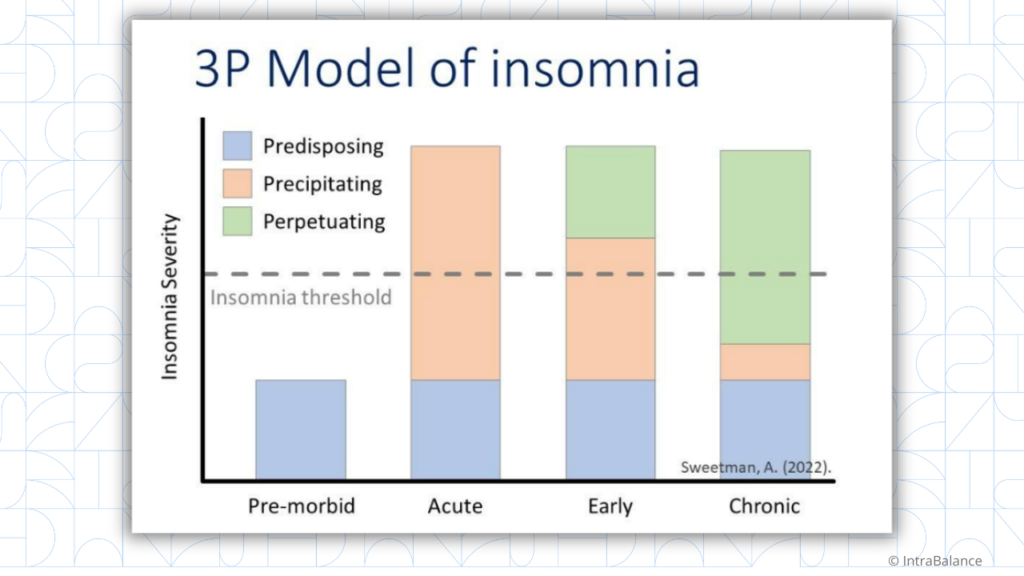
One of the first things I do with an insomnia patient, whether it’s in a 1:1 session or in my group program, is show them the 3P Model of Insomnia.

It’s super simple and impactful, and you can start using it in your practice as well.

Despite being foundational in behavioral sleep medicine, it often gets overlooked in medical training, which is a shame, because it explains exactly why insomnia becomes chronic, and why certain treatments work while others don’t.

The slide below visually shows how insomnia evolves from acute to chronic.

Let’s walk through how you can use this with patients.

The 3P model explained simply

The 3P model describes insomnia in terms of predisposing, precipitating, and perpetuating factors.

Predisposing factors are like dry kindling. Precipitating factors are the spark. Perpetuating factors are the oxygen that keeps the fire burning.

Even when the original spark is gone, the fire doesn’t go out if oxygen is still feeding it.

Here’s how that plays out clinically.

3P Model of Insomnia

Predisposing factors increase vulnerability to insomnia but don’t cause it on their own.

Examples: Anxiety-prone or perfectionistic traits; female sex; advancing age; chronic medical or pain conditions, etc.

Precipitating factors are the events that trigger insomnia.

Examples: illness or injury; major life transitions; grief.

For many people, sleep normalizes once the stressor resolves. But for others, insomnia persists.

Perpetuating factors are the behaviors and cognitive processes that maintain insomnia after the original trigger is gone. This is the oxygen that keeps the fire burning.

Examples: Spending too much time in bed awake; Irregular sleep schedules; Conditioned arousal in the bedroom; Worrying about sleep or trying to force sleep; Rigid beliefs about “perfect” sleep; Cycling through different types of supplements or medications

Many of these behaviors feel adaptive and protective to patients, which is why they’re so easy to miss.

Why this model matters in clinical practice

When I go over the 3P model with patients, the idea is not to fixate on why their insomnia started, but to help them see how it’s being maintained.

The 3P model helps patients see that what matters now are the perpetuating factors, because they are the oxygen that’s keeping insomnia alive.

This reframing helps to get buy-in before you introduce behavioral changes.

CBT-I (cognitive behavioral therapy for insomnia) and ACT (acceptance and commitment therapy) work because they remove the oxygen that keeps the insomnia burning.

This also helps explain why medications may provide short-term relief, but often don’t lead to durable change when the perpetuating behaviors and cognitions remain intact.

How to frame this with your patients

You can say something like: “We don’t need to figure out what started your insomnia to help it improve. We’re focused on what’s keeping it going, because that’s what we can change.”

Framing it that way tends to reduce the fear and improve adherence to behavioral treatment.

If you’re working with patients struggling with chronic insomnia, this model can be a powerful starting point and help build rapport.

Save the slide and start using it in your practice…and let me know how it goes.
Next, collect your CME for this email below, using the Learner+ link.

If you missed last week’s video on how to use the Insomnia Severity Index (ISI), watch it here:

Did you learn something today? Click here to find out how Learner+ can help you meet your evolving educational goals. https://champions.learner.plus/?champion=Dr%20Nishi%20Bhopal

References:
Schutte-Rodin S, Broch L, Buysse D, Dorsey C, Sateia M. Clinical guideline for the evaluation and management of chronic insomnia in adults. J Clin Sleep Med. 2008 Oct 15;4(5):487-504. PMID: 18853708; PMCID: PMC2576317.

How to use the ISI in clinical practice

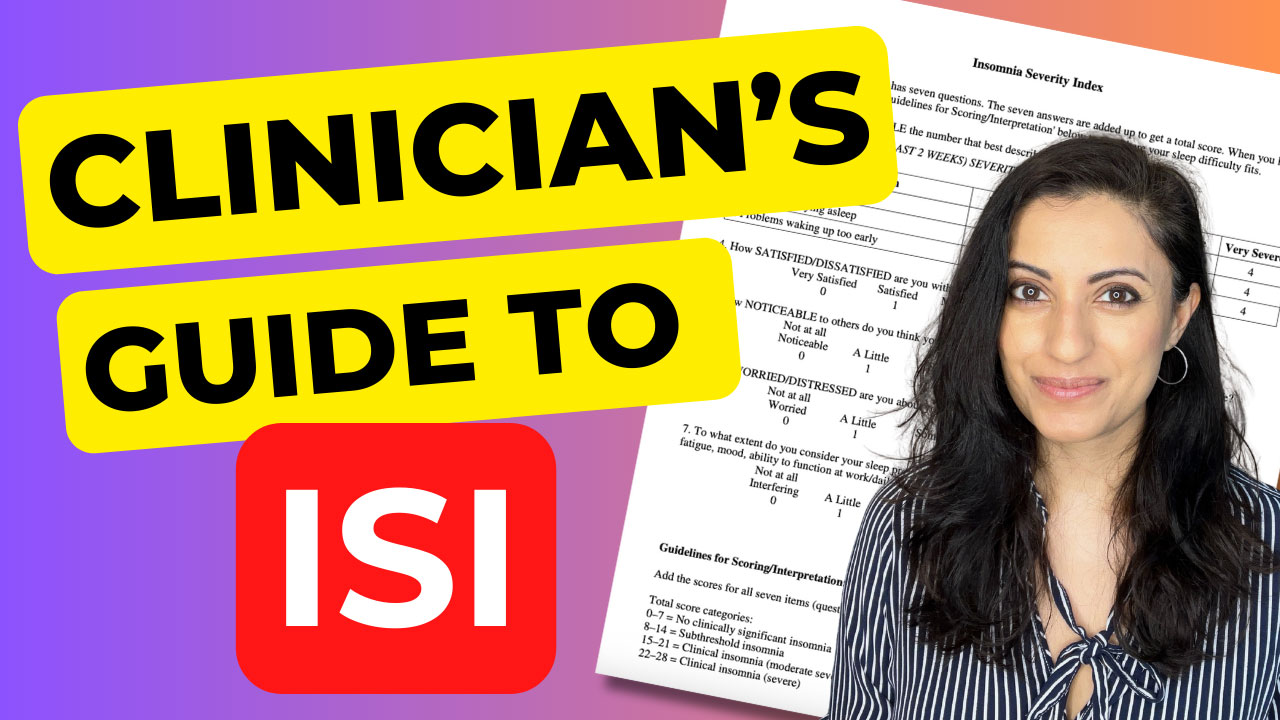
Are you treating patients with sleep complaints but lacking a dedicated insomnia measure? Join Dr. Nishi Bhopal MD to discover the Insomnia Severity Index (ISI), a well-validated tool designed to assess insomnia severity, distress, and daytime impact.

Do you use the ISI (Insomnia Severity Index) in clinical practice?

Last year, I worked with a patient whose ISI score was 24 at the start of treatment, which indicates severe clinical insomnia.

He was so worried about his sleep that he’d taken a leave from work and was terrified that he’d never be able to go back to work or be present with his young daughter.

He thought his ability to sleep was forever “broken.”
We worked together over the next few months, and by the end of treatment his ISI score was down to 6, indicating no clinically significant insomnia.

It was a huge win!

He’s now back at work and knows exactly what to do when sleep is difficult. He’s no longer afraid that a bad night means that he’ll never sleep again.
Watching his ISI scores change over time was meaningful for me as the treating physician, but it was also powerful for the patient.

It gave him a tangible way to see progress that wasn’t always obvious night to night.
If you’re not already using the ISI in your practice, I highly recommend it.

I just released a new video for clinicians on how to use it.

In this video, you’ll learn:

  • What the ISI measures
  • Which patients to administer it to
  • Scoring and interpretation guidelines
  • How often to administer it (intake → monitoring → termination)
  • Limitations of the ISI
  • How I use it in my practice
  • And more

CME is available for this video. To earn credit, watch the full video here and use the Learner+ link in the video description.

Did you learn something today? Click here to find out how Learner+ can help you meet your evolving educational goals.

Is integrative sleep medicine a scam?

As we kick off the new year, I thought we could start with some sleep medicine myth busting, starting with a look at integrative medicine.

As we kick off the new year, I thought we could start with some sleep medicine myth busting, starting with a look at integrative medicine.

A few weeks ago, I heard two comments on the same day that gave me pause.

The first one was in a physician Facebook group where a doctor wrote that integrative medicine is a scam to sell supplements, calling it a cash grab.

That same day, a clinician in my Clinical Sleep Kit education program said that integrative medicine was too expensive and asked where to find low-cost supplements for their underserved patients.

These were two very different contexts, but with the exact same assumption.

  • The assumption being that integrative medicine = supplements.

For the record, that assumption is untrue.

However, it’s problematic because that mindset limits how we care for patients with insomnia and mental health issues.

So I recorded a short video to show you what integrative sleep medicine looks like in clinical practice and to share some resources that you can start using today.

In this video, you’ll learn:

  • What integrative sleep medicine is
  • How it aligns with evidence-based care
  • 2 case studies from my clinical practice
  • How to practice integrative medicine without supplements, labs, or added cost
  • What actually comprises the heart of integrative sleep treatment and why supplements are usually peripheral
  • How to partner with patients instead of overwhelming them, using simple coaching-style phrases (steal them phrases for your practice)

If you’ve ever felt skeptical, confused, or unsure how integrative sleep medicine fits into your clinical practice, this video will bring clarity.

Did you learn something today? Click here to find out how Learner+ can help you meet your evolving educational goals.

Is AI going to replace clinicians?

Is AI going to replace sleep clinicians?

As we wind down the year, I’ve been reflecting on changes in my medical practice. Things are so different from when I finished my training over a decade ago.

2025 was the year of AI and I’ve seen a lot of concern from clinicians about whether AI will replace us. What do you think?

In collaboration with VuMedi, I’m sharing a 2025 year in review about AI in sleep medicine.

In this video, I’m sharing:

  • AASM guidelines on AI in clinical practice
  • How AI is creating more anxiety in my patients
  • The one tool that changed my workflow
  • A change in my practice in 2025 that I’m excited about
  • Whether AI will replace you
  • And more

Click to watch the video and don’t forget to claim your CME credits using the Learner+ link below.

Wishing you a joyful and prosperous 2026!

Did you learn something today? Click here to find out how Learner+ can help you meet your evolving educational goals.

Do sleeping pills work?

Do Sleeping Pills Work

A psychiatrist in my Clinical Sleep Kit (CSK) program for practitioners recently asked how I use prescription sleep aids in my practice.

By the time many patients reach my clinic, they’ve already cycled through nearly every sleep aid on the market. Because of that, my approach to insomnia is primarily non-pharmacological.

That said, sleep medications do have a role when they’re used thoughtfully and strategically.

Short-term, intermittent use can be appropriate for select patients.

But here’s the part many clinicians don’t realize:

→ The actual impact of most sleeping pills on sleep latency and wake after sleep onset is only a few minutes.

The gap between expectation and reality is often where prescribing challenges begin.
This week, I’m sharing a short tutorial on best practices for prescribing sleep aids and how to talk with patients in a way that prevents the loop of trialing of one medication after.

In this video, we cover:

  • AASM recommendations for the use of sleeping pills
  • When sleeping pills help and when they don’t
  • My personal prescribing practices
  • Word-for-word patient dialogues (steal these for your clinical practice)
  • And more

Click to watch the tutorial and don’t forget to claim your CME credits using the Learner+ link below.

Did you learn something today? Click here to find out how Learner+ can help you meet your evolving educational goals. https://champions.learner.plus/?champion=Dr%20Nishi%20Bhopal

References:
(1) Sateia MJ, Buysse DJ, Krystal AD, Neubauer DN, Heald JL. Clinical Practice Guideline for the Pharmacologic Treatment of Chronic Insomnia in Adults: An American Academy of Sleep Medicine Clinical Practice Guideline. J Clin Sleep Med. 2017 Feb 15;13(2):307-349. doi: 10.5664/jcsm.6470. PMID: 27998379; PMCID: PMC5263087.

Hormone Therapy for Mental Health

Hormone Therapy for Mental Health

I once did an informal survey on Facebook asking people their biggest sleep concerns. The majority of respondents were women in their 30s and above, and their number 1 concern was this:

→ Difficulty staying asleep

It wasn’t surprising, because hormones do have a known impact on sleep.

Lower levels of estradiol and higher levels of FSH during perimenopause are associated with sleep disturbances, independent of vasomotor symptoms and mood changes. (1)

As for progesterone, it’s known to have sedative properties, thought to act as a GABA-agonist. It also stimulates breathing via acting centrally on brainstem respiratory control centers, and by peripherally affecting upper airway patency. Thus, we see higher rates of sleep when progesterone levels drop in perimenopause and menopause. (2)

Now, whether hormone therapy (HT) is helpful is a bit more complex.

I’ve seen patients experience an initial improvement with HT, but then develop sleep issues again. So why might that be?

This week, we’re digging into hormonal shifts, mental health, and sleep changes with Harita Raja MD.

Dr. Raja is a reproductive psychiatrist specializing in hormone therapy for mental health. If you’re not already following her on Instagram, I highly recommend that you do.

In this interview, Dr. Raja shares:

  • How hormones affect psychiatric conditions
  • When to consider HT in women with mental health or sleep issues
  • Why HT is often not enough to overcome symptoms
  • The role of lab testing
  • Whether psychiatrists should be prescribing hormones
  • How to get trained in hormone therapy
  • And much more

Click here to watch the interview and don’t forget to claim your CE credits using the Learner+ link below. https://www.youtube.com/watch?v=rboinFa38SA

References:
(1) Coborn J, de Wit A, Crawford S, Nathan M, Rahman S, Finkelstein L, Wiley A, Joffe H. Disruption of Sleep Continuity During the Perimenopause: Associations with Female Reproductive Hormone Profiles. J Clin Endocrinol Metab. 2022 Sep 28;107(10):e4144-e4153. doi: 10.1210/clinem/dgac447. PMID: 35878624; PMCID: PMC9516110.

(2) Boukari R, Laouafa S, Ribon-Demars A, Bairam A, Joseph V. Ovarian steroids act as respiratory stimulant and antioxidant against the causes and consequences of sleep-apnea in women. Respir Physiol Neurobiol. 2017 May;239:46-54. doi: 10.1016/j.resp.2017.01.013. Epub 2017 Feb 9. PMID: 28189710.