
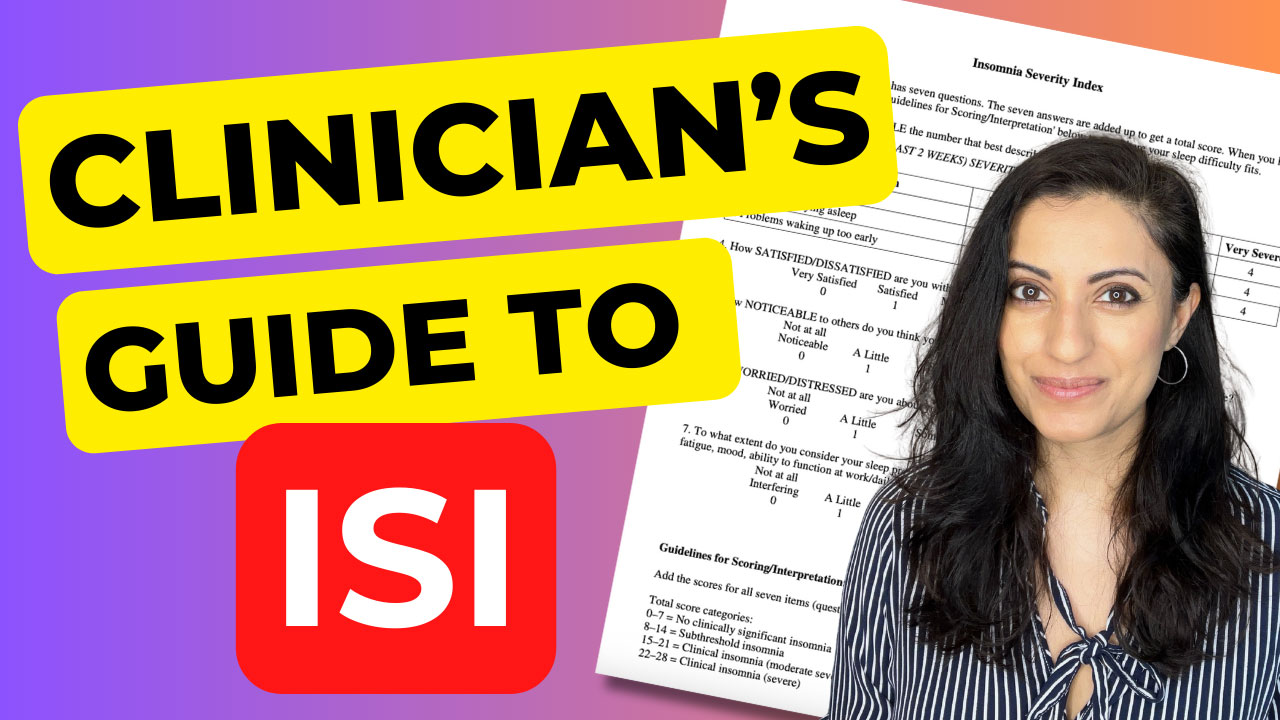
Do you use the ISI (Insomnia Severity Index) in clinical practice?
Last year, I worked with a patient whose ISI score was 24 at the start of treatment, which indicates severe clinical insomnia.
He was so worried about his sleep that he’d taken a leave from work and was terrified that he’d never be able to go back to work or be present with his young daughter.
He thought his ability to sleep was forever “broken.”
We worked together over the next few months, and by the end of treatment his ISI score was down to 6, indicating no clinically significant insomnia.
It was a huge win!
He’s now back at work and knows exactly what to do when sleep is difficult. He’s no longer afraid that a bad night means that he’ll never sleep again.
Watching his ISI scores change over time was meaningful for me as the treating physician, but it was also powerful for the patient.
It gave him a tangible way to see progress that wasn’t always obvious night to night.
If you’re not already using the ISI in your practice, I highly recommend it.
I just released a new video for clinicians on how to use it.
In this video, you’ll learn:
- What the ISI measures
- Which patients to administer it to
- Scoring and interpretation guidelines
- How often to administer it (intake → monitoring → termination)
- Limitations of the ISI
- How I use it in my practice
- And more
CME is available for this video. To earn credit, watch the full video here and use the Learner+ link in the video description.
Did you learn something today? Click here to find out how Learner+ can help you meet your evolving educational goals.






Recent Comments