Tag: Videos

How to Evaluate Insomnia in 10 Minutes (Clinical Workflow)

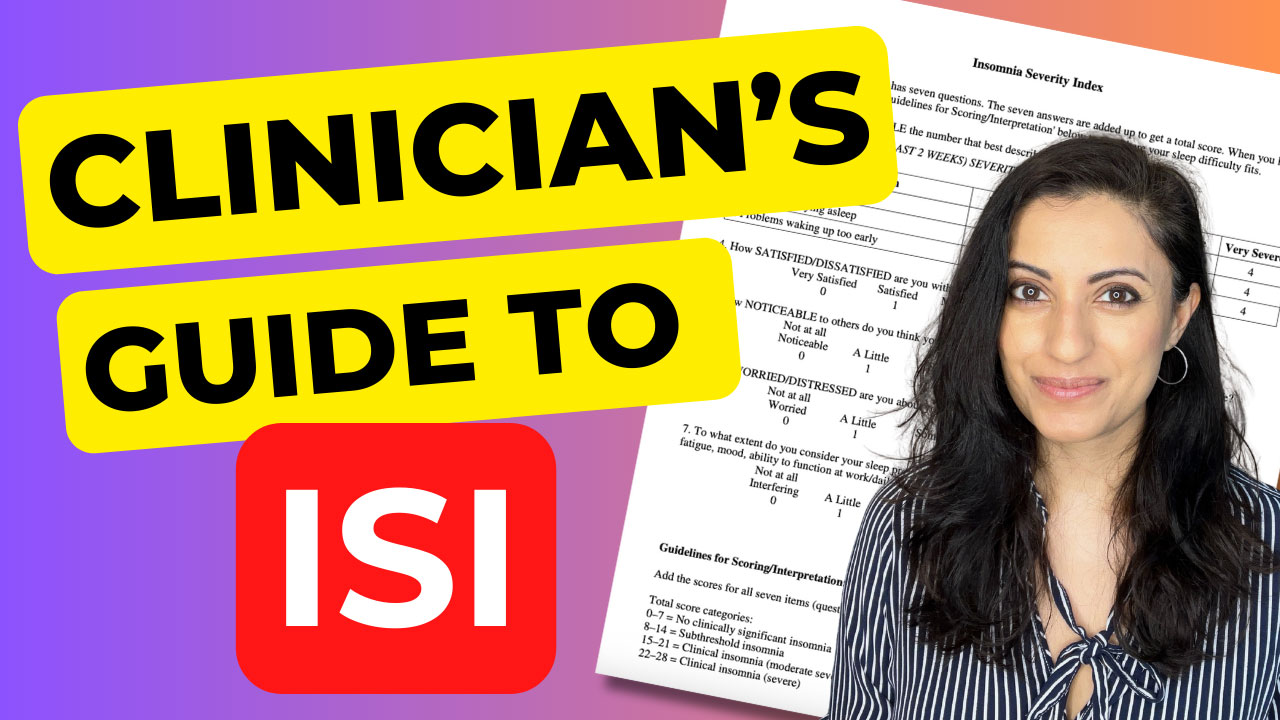
Psychiatrist and sleep medicine physician Nishi Bhopal, MD shares a practical clinic workflow to make insomnia evaluations more straightforward, noting most clinicians receive little formal sleep medicine training. Using a case of a woman with refractory insomnia on zolpidem, he shows how missed factors—sleep environment (sleeping in an unventilated closet), undiagnosed obstructive sleep apnea, and behavioral drivers addressed with CBT-I principles like reducing time awake in bed—can lead to major improvement and medication tapering. He teaches a structured framework (FEEM: food, environment, emotional factors, medical conditions), highlights language clues patients use, and explains sleep drive with a hunger analogy. He recommends standardized tools (Epworth, ISI, GAD-7, PHQ-9, MDQ), AASM sleep history/diary, and the patient-centered FIFE interview (feelings, ideas, functioning, expectations) to uncover perpetuating beliefs and the patient’s relationship with sleep.

Why Your Insomnia Patients Aren’t Getting Better (And What You’re Missing)

Why Insomnia Treatment Isn't Working: 3 Things Clinicians Often Miss

Psychiatrist and sleep medicine physician Nishi Bhopal, MD explains why chronic insomnia can persist despite sleep hygiene, medications, supplements, melatonin, and even CBT-I, outlining three commonly missed issues in clinical practice: misunderstanding insomnia-related hyperarousal and the patient’s learned relationship with wakefulness at night, the counterproductive effect of trying to force sedation, and targeting the wrong perpetuating factors. Using the 3P model and a case of a 34-year-old tech worker with worsening insomnia, she emphasizes focusing on what perpetuates insomnia rather than what triggered it, introduces the CSH framework (circadian patterns, sleep drive, hyperarousal) to guide targeted, simplified interventions, and highlights how clinician communication and expectations can reduce anxiety and rebuild patient confidence.

Sleep Study Is Normal but Your Patient Keeps Waking Up — What Are You Missing?

Sleep study normal, now what?

Dr. Nishi Bhopal MD, a psychiatrist and sleep medicine physician, explains how to evaluate patients who wake every few hours despite a “normal” sleep study, emphasizing that a single study especially a home sleep apnea test does not rule out sleep apnea or other causes of sleep fragmentation because it mainly measures breathing rather than sleep architecture, limb movements, or narcolepsy. She presents a case where repeated awakenings were driven by upper airway resistance that increased breathing effort and sympathetic activation without meeting apnea criteria. She frames fragmented sleep as recurrent nervous system activations and offers a practical clinical approach: systematically assess four categories of common drivers food/metabolic factors (e.g., reflux, alcohol, hypoglycemia, low ferritin/B12), environmental factors (light, noise, temperature, circadian disruption), emotional/psychological activation (stress, anxiety, rumination, trauma, conditioned arousal), and medical causes (pain, endocrine disorders, RLS/PLMs, sleep apnea, narcolepsy), noting many patients have multiple contributors.

Sleep & Major Depressive Disorder: A Psychiatrist’s Clinical Insights

Dr. Bhopal interviews Dr. Amit Chopra, a psychiatrist and sleep specialist at Massachusetts General Hospital and Harvard Medical School, about the bidirectional relationship between major depressive disorder and sleep disorders.

Dr. Bhopal interviews Dr. Amit Chopra, a psychiatrist and sleep specialist at Massachusetts General Hospital and Harvard Medical School, about the bidirectional relationship between major depressive disorder and sleep disorders. Dr. Chopra explains that persistent insomnia increases future depression risk (about twofold overall and nearly fourfold in adolescents), and DSM-5 now treats insomnia as an independent disorder rather than “secondary.” They discuss other common comorbid sleep conditions in depression (obstructive sleep apnea, restless legs syndrome, circadian rhythm disorders, hypersomnolence), consequences of missed diagnoses (recurrence, partial response, treatment resistance), shared neurobiology, and insomnia as an independent suicidality risk factor. The episode outlines a practical 10–15 minute sleep assessment, when to order sleep studies, and evidence-based treatments including CBT-I (techniques, delivery formats, digital options) and selective medication use when needed.

Does Clinical Hypnosis Work For Insomnia?

Does Clinical Hypnosis Work For Insomnia?

Join Dr. Nadia Sarwar, a double board-certified pediatrician and palliative care physician, as she demystifies clinical hypnosis and its applications in treating sleep disorders and anxiety. Learn about the neurobiological effects of hypnosis, evidence-based practices, and how to tailor hypnosis for individual patients. Dr. Sarwar shares her journey into clinical hypnosis, its benefits, and practical steps for clinicians interested in integrating hypnosis into their practice. Perfect for healthcare professionals looking to expand their therapeutic toolkit.